
Choosing the right country for dental implants is one of the most important decisions in the entire process. While pricing often drives the initial search, factors such as travel distance, clinic experience, treatment approach, and follow-up logistics can have just as much impact on the final outcome.
Turkey, Mexico, and Hungary are among the most popular destinations for Canadian patients. Each offers a different balance of cost, convenience, and clinical experience. Understanding these differences can help you choose the option that best fits your situation. For a deeper price breakdown, see the 2026 Turkey dental implant cost guide.
In this guide
Price Comparison: What Can You Expect to Pay?
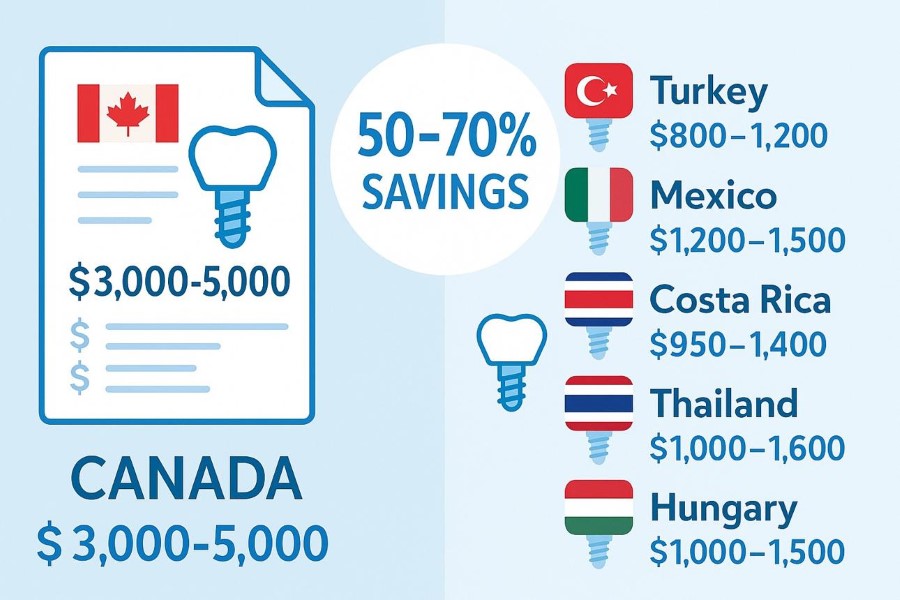
Cost is usually the starting point for most patients. While all three countries offer significantly lower pricing than Canada, there are still differences between them.
| Treatment | Turkey | Mexico | Hungary |
|---|---|---|---|
| All-on-4, one arch | $5,000–$8,500 | $11,000–$20,000 | $9,000–$16,000 |
| All-on-4, upper and lower arches | $10,000–$16,000 | $22,000–$34,000 | $18,000–$32,000 |
| All-on-6, one arch | $6,500–$10,000 | $14,000–$24,000 | $12,000–$20,000 |
| All-on-6, upper and lower arches | $13,000–$18,000 | $28,000–$42,000 | $24,000–$40,000 |
| Complete implant, abutment and crown | $900–$1,800 | $1,200–$2,800 | $1,100–$1,900 |
Turkey is generally the most cost-effective option, especially for full mouth restorations. Mexico typically falls in the middle range, while Hungary can be slightly higher due to its European location and structure.
Full-mouth cost planning
Full Mouth Dental Implants Abroad: What the 2026 Price Really Covers
A full-mouth quotation normally refers to restoring both the upper and lower arches. This is different from a price advertised per arch, which covers only one jaw. Before comparing countries, confirm whether every figure covers one arch or both arches and whether the quoted teeth are temporary or final.
Turkey
All-on-4: $10,000–$16,000 CAD
All-on-6: $13,000–$18,000 CAD
See the Turkey cost guideMexico
All-on-4: $22,000–$34,000 CAD
All-on-6: $28,000–$42,000 CAD
See the Mexico cost guideHungary
All-on-4: $18,000–$32,000 CAD
All-on-6: $24,000–$40,000 CAD
See the Hungary cost guideImportant: These are general market estimates in Canadian dollars, not fixed prices or treatment recommendations. Actual quotations depend on clinical findings, implant systems, restorative materials, laboratory work, additional procedures, exchange rates and package inclusions.
Compare the Total Cost, Not Just the Implant Package
The lowest advertised treatment price may not be the lowest final cost. Build a complete budget that includes:
- Upper and lower arch treatment, when both are needed
- Extractions, bone grafting, sinus lifts or sedation
- Temporary teeth and the material used for the final restoration
- Diagnostic imaging, laboratory work, medication and follow-up visits
- Flights, accommodation, ground transportation and travel insurance
- A possible second trip after healing and local care after returning home
Ask every clinic for an itemized written quotation using the same treatment assumptions. Our hidden costs of dental tourism guide explains the expenses most likely to be omitted from headline prices.
Questions That Make Full-Mouth Quotes Comparable
- Does the price cover one arch or both arches?
- How many implants are planned in each arch?
- Which implant manufacturer and system will be used?
- Are the advertised teeth temporary or final?
- What restorative material is included?
- Which procedures can increase the price after examination?
- How many trips and treatment days are expected?
- Who handles complications and maintenance after you return home?
For treatment-design differences, read All-on-4 vs All-on-6 abroad. To organize quotations side by side, use The Dental Implant Patient Handbook and Planning Workbook.
Travel Distance and Convenience
Travel time can significantly affect your experience, especially for multi-visit treatments like dental implants.
Mexico is the closest option for Canadian patients, with direct flights often ranging from four to six hours depending on the departure city. This makes it a convenient choice for patients who prefer shorter travel times or want easier access for follow-up visits.
Hungary typically requires an eight to ten hour flight, often with a connection. Turkey usually involves a longer journey of ten to twelve hours, sometimes with layovers. While longer travel can be manageable, it may feel more demanding, especially after surgery.
After comparing destinations, read our clinic selection guide to learn how to evaluate treatment plans, communication, support, and clinic transparency.
Clinic Experience and Quality
All three countries offer modern clinics and experienced dentists. However, the patient experience can vary depending on how clinics are structured and how they handle international patients.
Turkey has a large number of clinics that focus heavily on international dental tourism. Many of these clinics are designed to manage full mouth implant cases efficiently, often with multilingual staff and coordinated treatment schedules.
Mexico has a mix of clinics, from small practices to larger dental centers. Many dentists are experienced in treating North American patients and may offer a more familiar communication style for Canadians.
Hungary has a long-standing reputation in dental tourism, particularly within Europe. Clinics often emphasize precision, structured treatment planning, and traditional European dental practices.
Packages and What’s Included
One of the biggest differences between these destinations is how treatment is packaged and presented.
In Turkey, many clinics offer all-inclusive packages that may include hotel accommodation, airport transfers, translation services, and coordinated scheduling. This can simplify the process, especially for first-time dental travelers.
In Mexico, treatment is often more flexible. Some clinics include transportation or accommodation, but many operate on a pay-as-you-go model. This can provide more control, but may require additional planning.
In Hungary, packages are less common, and treatment is usually structured more like traditional dental care. Patients may need to arrange hotels and transportation separately, but the process is often straightforward.
If you are comparing total costs, our hidden costs guide explains the extra expenses patients should consider before travelling for dental implants.
Follow-Up and Accessibility
Dental implants require follow-up care, even if the procedure is completed successfully. This can include adjustments, maintenance, or addressing minor issues that may arise over time.
Mexico has an advantage in this area due to proximity. If a follow-up visit is needed, it is generally easier and less expensive to travel back. Turkey and Hungary may require more planning for return visits due to longer travel distances.
Which Destination Is Best for You?
Turkey
Best for patients focused on overall value and comprehensive packages. Often the most cost-effective option for full mouth implants.
Mexico
Best for patients who prioritize convenience, shorter travel, and easier follow-up visits from Canada.
Hungary
Best for patients who prefer a European setting and clinics with a long history in dental tourism.
Final Thoughts
There is no single “best” country for dental implants. The right choice depends on your priorities, including budget, travel comfort, treatment complexity, and how important follow-up accessibility is to you.
Rather than choosing a destination first, it is often more effective to compare treatment plans from different clinics. This allows you to evaluate not just price, but also what is included, how the treatment is structured, and whether the clinic’s approach matches your expectations.
Key takeaway
The best destination is not just about cost. It is about finding the right balance between quality, travel, and long-term support.